Office relocations should not disrupt business operations to ensure continuity and a smooth transition of business. Every lost hour might imply lost opportunities, dissatisfied clients, and delays in the delivery of essential services. No company can afford to be offline for an extended period in a busy business metropolis like Nairobi with very stiff competition. With proper planning and execution, businesses can ensure minimum loss of productivity or business by getting back to work in the least time and without losing their competitiveness. In this article, we provide practical tips on how to minimize downtime during an office move in Nairobi.
How to Minimize Downtime During an Office Move in Nairobi
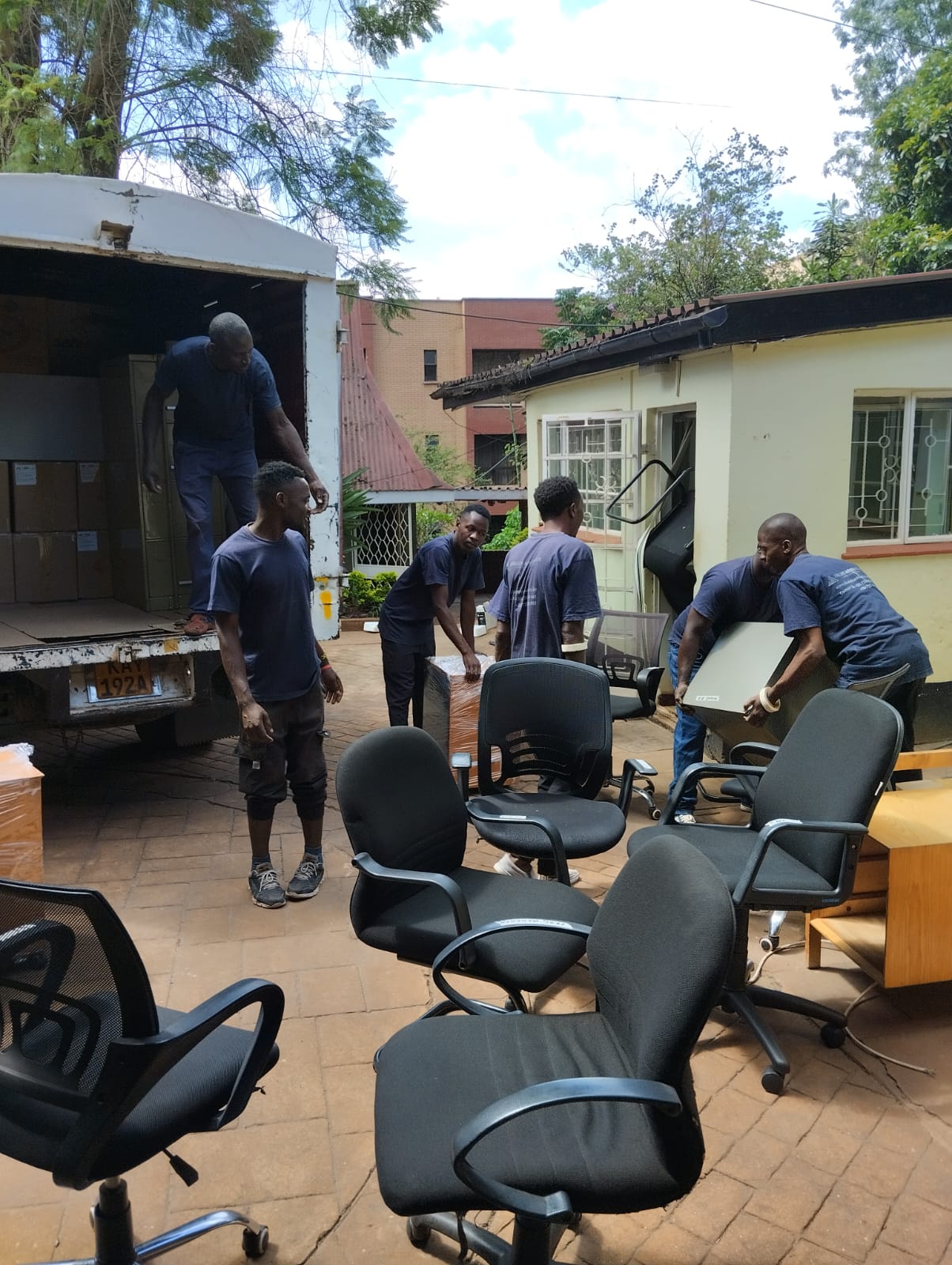
Plan the Move in Advance
Start with a detailed timeline and checklist of the whole process: major milestones include packing, disconnection, and reconnecting of IT equipment, the fitting out of the new office space, and everything operational in time for reopening. A clear timeline puts an end to last-minute rushes and keeps the move on schedule.
Early enough in the process, engage your team members. Also, assign certain roles and responsibilities to different employees to distribute the workload and ensure accountability. This way, a team effort ensures that no detail is left behind, and all are aware of their role in the move for efficiency. Early planning, accompanied by engaging your staff, will make this process smooth, quicker, and in order, reducing chances of creating downtime.
Choose the Right Moving Company
One thing choosing the right moving company will do is to reduce your office downtime. Specialized office movers in Nairobi have the requisite expertise, equipment, and resources that can easily overcome the complexities of moving businesses efficiently. They can understand what an office move entails in terms of safety for IT equipment, furniture, and important documents. The experience in conducting large-scale moves helps them to carry out the relocation process as fast as possible so that the time for which your business will remain offline is least.
Variety of factors can be considered while choosing a moving company
Experience: Select movers who have experience in office relocations. Past experience gives insight into how well they are used to handling different conditions or issues that may come across during the move, like relocation of delicate equipment, setting it up in new office spaces.
Reliability: The company should be reliable, observing timelines. Delays from the mover will extend downtime and mess up your operations even further.
Customer Reviews: Check online customer reviews; request references of former clients. A moving company that has continuous positive feedback will most likely provide quality service.
Communicate with Employees and Clients
Effectively communicating the details of an office move will help minimize its impact both on the employees and on the clients. Keeping people in the know means less confusion and frustration.
Pre-Move Notification: Informed well in advance, a move will enable employees to be prepared for it. Allow them to know, through a timeline, when the relocation is to occur, and how. Call upon them to get their personal belongings ready well in advance, and to take good care of working documents and office equipment. Keeping the employees in the know will also allow them to mentally prepare and adjust their schedules for any plausible disruption.
Notifying Clients of Service Disruptions: This is just as important as notifying your employees. You will need to notify your clients far in advance when the office is to move and if there will be some sort of disruption in service. Clearly define when operations will resume. It is a proactive step taken to try to manage client expectations and also signifies that you value minimizing disruptions in service.
Create a Backup Plan for Essential Operations
Core departments and functions need to be up and running in order for business to continue while an office relocation is underway. This is very significant to identify such functions and make a backup in order to enable them to keep functioning up to the end of the moving process.
Identify mission-critical tasks and departments: Identify which departments cannot afford to go offline, for example, customer service, IT support, and finance. Consider what kinds of support such teams may need to continue working during the physical move.
Work from Home or Temporary Office Setup: Whenever possible, a temporary work-from-home arrangement can be suitably arranged for staff. Provide them with laptops, access to all necessary files, and avenues of communication so that they may continue working from home during the move. If this cannot be done, consider setting up a temporary office space where essential operations can continue while the main office is being set up. Consider the benefits of business continuance through storing your data on cloud-based services and sharing files with your employees and software applications.
Organize and Label Office Items
Effective organization and labeling of items in an office can go a long way in making the process of moving a lot easier, hence reducing downtime. If one is well prepared, they can unpack faster and set up at the new location.
Label and categorize the office items: Place all items in the office into categories based on their type, usage, or location. Each box should be labeled with regards to its contents and which room or area it falls into in the new office. To make identification easier, color-code the labels on the types of items. Also, include a short description of what is contained in the box on the label for avoiding confusion when unpacking.
Prioritize Moving Essential Equipment: Segregate the moving of essential equipment and furniture that is so vital to your business process. These include the equipment to be moved first, like computers, printers, and telephones, since it is required to resume the important work as soon as possible. Thus, taking care of the more critical pieces of equipment at the forefront will result in less setup time and reduce the impact this move will have on your day-to-day business processes.
Hire Professional Help for Specialized Equipment
Specialized and delicate equipment requires expertise and precision in handling to avoid damage and minimize downtime.
Reasons why professionals are in demand while moving fragile and specialized equipment: Office equipment may be very expensive, large, or sensitive in nature-such as high-value printers, servers, or sophisticated lab equipment-that invariably require a lot of specialized handling and care. Professional movers will have relevant experience in handling such equipment and, therefore, the knowledge and tools to handle such equipment while ensuring safe transit. They know how to dismantle, pack, and transport such specialized equipment with minimum risk of damage.
This reduces the risk of damages to be caused during the moving of fragile or expensive equipment. The professionalism ensures that all items are well-packed and transported in safety, with any dismantled piece of equipment put up correctly in the new office. Such careful handling reduces the occurrence of damages that would prolong the fumes, hence a smooth transition and faster resumption of activities. Protect your valuable assets by investing in professional help rather than costly repairs or replacement.
Conduct a Post-Move Review and Debrief
These are the important measures that allow a company to review how efficiently an office move has been carried out and further identify any areas of improvement after the relocation process is complete.
Move Smoothness Assessment: The first aspect of any move is actually to assess just how smooth the move went. Go back and look at the timeline and the checklist to see if everything was completed as scheduled, which could reveal delays or problems experienced. Determine how well main areas like the setting up of IT and equipment relocation went, whether any unexpected problems were overcome.
Feedback from Staff and Clients: Inquire from staff and clients their experiences regarding the transfer. The employees will comment on how smooth the process was and how it disrupted them. They can comment on the efficiency of the process and any disruptions the move may have caused them. Clients, for their part, will be a source of insight into how the move impacted clients’ interactions with your business. Collecting this feedback, and analyzing the same will help you gauge the impact caused by your relocation on all the stakeholders, while also informing you on how to improve any future relocations.
Improve for Future Moves: Take the knowledge from review and feedback to improve for future moves. Understand what went well and what might have been easier or smoothed over. Create a list of lessons learned, best practices based upon the outcomes of the move. Incorporating these improvements into your planning will go a long way toward assuring that future relocations go smoother and more smoothly.
Conclusion
Minimizing downtime during an office move might have a critical impact on business continuity and enable the decreased effect on your operations. A well-conducted move means your business is back running its routine operations quickly, with no disruptions that might further change productivity or client satisfaction.
To this end, plans should be laid early and properly, the right moving company chosen, and communication effectively relayed to employees and clients. Other strategies that will be considered include maintaining core operations, renovations in IT infrastructure, handling special equipment with care. Lastly, a post-move review will be helpful in providing an overview of the lessons learned and how to improve upon future moves.